Table of Contents
- Quick Comparison Table
- 1. YourRadar: Mobile-Driven Dispatch and Timesheet Automation
- 2. Simpro: Project Management and Job Costing for Complex Installations
- 3. FieldBoss: Deep Microsoft Integration for Preventative Maintenance
- 4. BuildOps: Commercial HVAC Service Contracts and Real-Time Dispatching
- 5. Skedulo: AI-Powered Scheduling for Enterprise-Scale Operations
- How to Choose a Field Service Management Platform for Small Business
- HVAC Field Service Management Software Features That Drive Scaling
- Frequently Asked Questions
Last Updated: September 29, 2026
Quick Comparison Table
| Tool | Best For | Key Strength | Mobile-First |
|---|---|---|---|
| YourRadar | Small HVAC teams scaling up | Customizable dispatch & timesheets | Yes |
| Simpro | Complex installations & projects | Job costing and maintenance scheduling | Yes |
| FieldBoss | Microsoft ecosystem users | Preventative maintenance contracts | Yes |
| BuildOps | Commercial HVAC contractors | Service agreements and real-time dispatch | Yes |
| Skedulo | Enterprise-scale operations | AI-powered scheduling optimization | Yes |
Scaling an HVAC business means managing more technicians, more jobs, and more complexity without losing control. The right workforce management tools HVAC companies choose can be the difference between profitable growth and operational chaos. This guide from YourRadar covers the top five workforce management tools designed specifically for trades businesses looking to scale, along with how to evaluate which one fits your operation.
Most HVAC contractors start with spreadsheets, phone calls, and a dispatcher who knows everything. That works until you hit 10-15 technicians. After that, you’re either investing in software or watching your margins disappear into miscommunication, duplicate jobs, and unpaid hours.
Below, we’ll break down the five platforms that actually solve the scaling problem, what makes each one different, and how to pick the right one for your business.
1. YourRadar: Mobile-Driven Dispatch and Timesheet Automation
YourRadar is built specifically for trades businesses that are tired of administrative overhead. It’s not trying to be everything to everyone, it’s focused on the core problem: getting jobs dispatched fast and getting accurate timesheets without your team fighting the system.
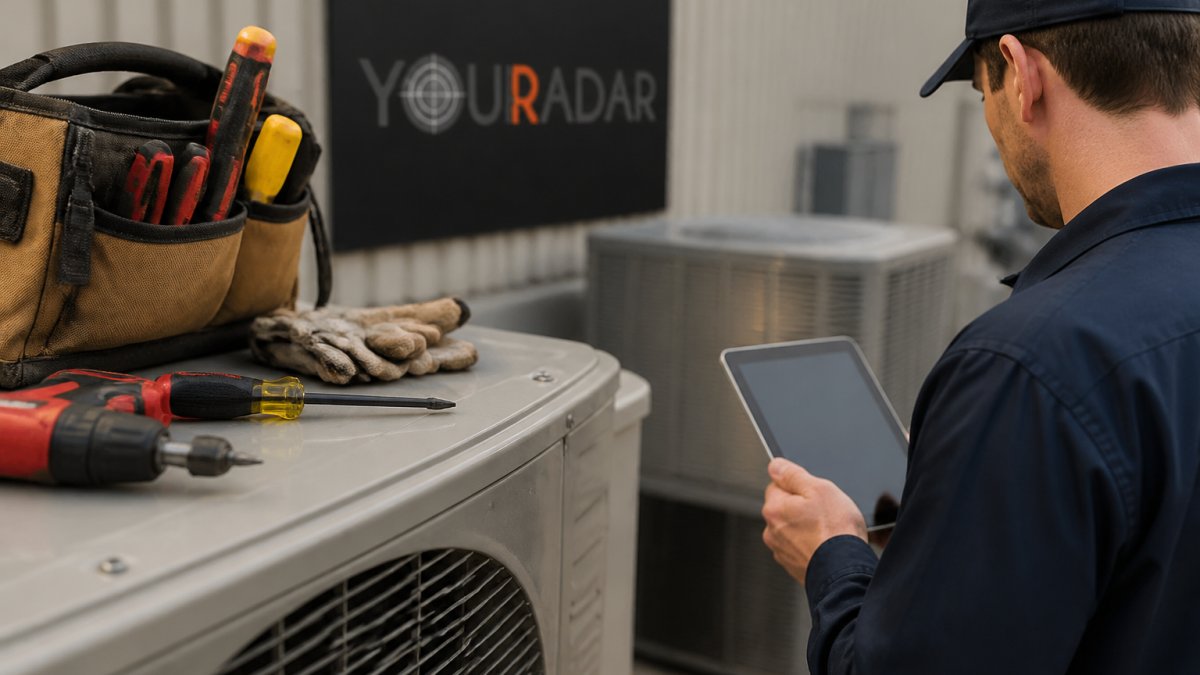
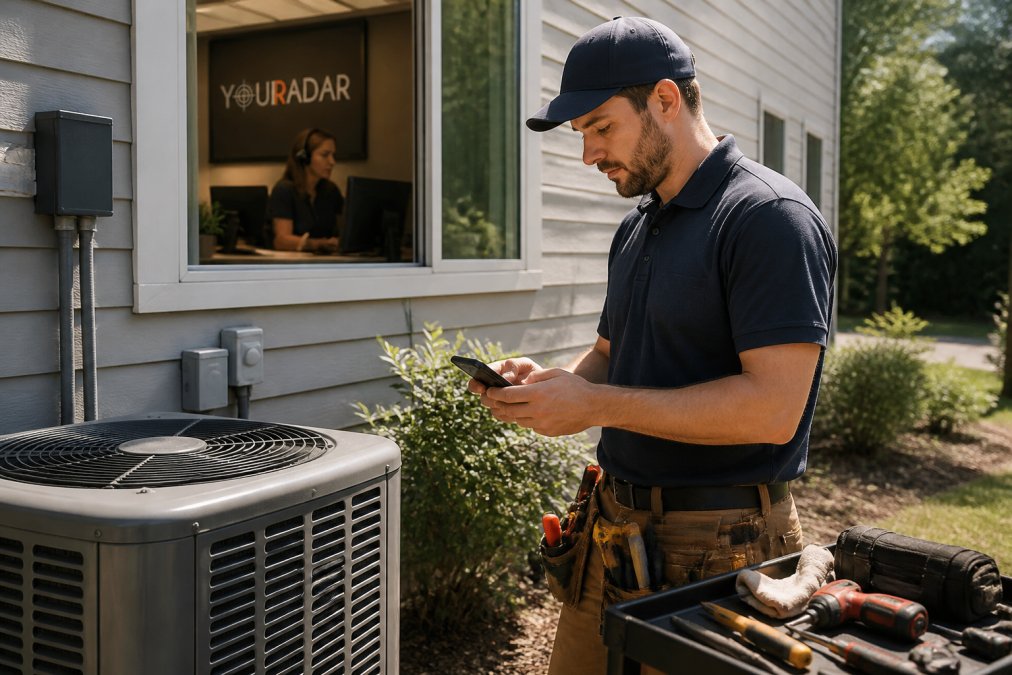
The platform’s strength is simplicity. Your technicians use a mobile app to see their day’s jobs, mark arrival and completion times, and snap photos of work completed. Your office staff see real-time status updates without chasing people down. Invoicing pulls directly from verified timesheets, which means fewer billing disputes and faster cash flow.
What sets YourRadar apart is the customization. You’re not forced into a workflow that assumes your business works like every other HVAC company. The team builds features around what you actually need, whether that’s specific job types, custom fields, or integration with your existing accounting software.
YourRadar’s in-house development team means you’re not stuck waiting for feature requests. If something doesn’t work for your operation, they can build it.
The real win here is the adoption rate. Non-technical field staff actually use it because it doesn’t feel like software, it feels like a mobile tool that makes their job easier.
Pros:
- Customizable feature set tailored to your specific workflows
- Mobile app designed for field technicians, not office workers
- Backed by KDI’s 25 years of trades industry experience
- Simple interface that trades staff actually adopt
- In-house development team for custom support
Cons:
- Smaller ecosystem compared to enterprise platforms
- May require initial setup time to configure for your business
Best For: Small HVAC teams (5-30 technicians) scaling up and needing better dispatch and timesheet control without enterprise complexity.
2. Simpro: Project Management and Job Costing for Complex Installations
Simpro is built for HVAC companies that do a mix of service calls and larger installation projects. If you’re running both residential maintenance contracts and commercial HVAC replacements, Simpro’s job costing and project management tools matter.
The platform tracks costs in real time, labor, materials, subcontractor fees, everything. You can see whether a job is profitable before it’s done, not three months later when you’re reconciling invoices. That visibility changes how you price work and where you focus your team’s effort.
Simpro also handles preventative maintenance scheduling at scale. You can set up automated service reminders, track equipment history across all your customers, and ensure nothing falls through the cracks. For companies managing hundreds of maintenance contracts, that’s the difference between steady recurring revenue and chasing missed appointments.
The mobile app works well for field teams, and the reporting dashboard gives you real visibility into job profitability and technician use.
Pros:
- Strong financial and project tracking for mixed service/installation work
- Scalable for complex business operations
- Comprehensive maintenance scheduling
- Real-time job profitability visibility
Cons:
- Can be overkill for very small, residential-only businesses
- Steeper learning curve than simpler platforms
Best For: HVAC companies handling both residential service calls and larger commercial projects, where job costing and project management are critical.
3. FieldBoss: Deep Microsoft Integration for Preventative Maintenance
FieldBoss runs on Microsoft Dynamics 365, which means if your office already lives in Outlook, Excel, and Teams, this integrates seamlessly. Your dispatchers work in Outlook. Your technicians get job details synced to their mobile devices. Your accounting pulls directly from the system.
That integration depth matters when you’re scaling. Data doesn’t get re-entered. Technicians don’t have to log into a separate system. Your office staff works in tools they already know.
The platform excels at preventative maintenance contract management.
Pros:
- Seamless integration with Microsoft Dynamics 365 and Outlook
- High level of data security and platform stability
- Detailed equipment tracking and service history
- Strong for preventative maintenance workflows
Cons:
- Requires familiarity with Microsoft business environments
- Setup complexity if you’re not already in the Microsoft ecosystem
4. BuildOps: Commercial HVAC Service Contracts and Real-Time Dispatching
BuildOps is purpose-built for commercial HVAC contractors. If your business is focused on service agreements and recurring maintenance contracts for commercial buildings, this platform speaks your language.
Pros:
- Purpose-built for commercial HVAC workflows
- Modern, intuitive interface
- Strong service agreement and recurring revenue management
- Real-time dispatching and technician tracking
Cons:
- Less focused on residential-specific workflows
- May include features you don’t need if you’re mostly residential
5. Skedulo: AI-Powered Scheduling for Enterprise-Scale Operations
Skedulo is the heavyweight in this list. If you’re managing 100+ technicians across multiple locations, the AI-powered scheduling optimization saves you money through better route planning and technician use.
Skedulo’s complexity and cost make it overkill for teams under 50 technicians. You’ll pay for capabilities you won’t use.
Pros:
- Highly sophisticated AI-powered scheduling algorithms
- Strong enterprise-level scalability
- Flexible API for custom integrations
- Real-time visibility into field operations
Cons:
- High complexity for smaller businesses
- Pricing reflects enterprise-level feature set
How to Choose a Field Service Management Platform for Small Business
Assess Your Current Pain Points
Start by being specific about what’s not working. Is your dispatcher spending three hours a day on the phone assigning jobs? That’s a dispatch problem. Are invoices constantly delayed because timesheets come in late or incomplete? That’s a timesheet and billing problem. Are you losing money on jobs because you can’t track costs in real time? That’s a job costing problem.
Evaluate Mobile-First Design and User Adoption
This is where most software implementations fail. Your technicians won’t use a clunky interface, no matter how powerful the backend is. If your team is not tech-savvy, mobile-first design isn’t optional, it’s essential.
Check Integration Capabilities with Existing Tools
You’re probably already paying for accounting software, possibly a CRM, maybe a scheduling tool. The right field service management platform should talk to those systems, not replace them.
HVAC Field Service Management Software Features That Drive Scaling
As you grow, certain capabilities become non-negotiable. These are the features that actually change your unit economics and operational control.
Dispatch Optimization and Real-Time GPS Tracking
Dispatch is where scaling breaks down. When you have 5 technicians, your dispatcher knows where everyone is. At 15 technicians, you’re guessing.
Automated Invoicing and Billing Accuracy
Billing is where scaling costs you the most money. Every hour a technician works but doesn’t bill is lost revenue. Every invoice delayed is cash flow delayed.
Service History Logs and Preventative Maintenance Scheduling
At scale, you’re managing dozens or hundreds of customer relationships. You need to know what work was done at each location, when, and by whom. That history informs future work, prevents duplicate service calls, and helps you upsell maintenance contracts.
Frequently Asked Questions
What features should HVAC companies look for in workforce management software?
Prioritize dispatch optimization, real-time GPS tracking, automated invoicing, and mobile accessibility for field technicians. Look for platforms that track service history, schedule preventative maintenance, and integrate with accounting systems. The best tools reduce administrative burden while improving first-time fix rates and technician utilization. Mobile-first design is critical, if technicians won’t use it in the field, it won’t improve your operations.
How does field service management software help HVAC businesses scale?
Field service management software eliminates scheduling bottlenecks, automates timesheet processing, and provides real-time visibility into workforce operations. This means dispatchers can assign jobs more efficiently, technicians spend less time on paperwork, and billing becomes accurate and faster. As you add technicians, the software scales without requiring proportional increases in office staff, directly improving your ability to handle more jobs with the same overhead.
Is workforce management software overkill for a small HVAC team with fewer than 10 technicians?
No. Small teams benefit most from streamlined scheduling and automated timesheets, these directly reduce the dispatcher’s workload and eliminate billing errors. Many platforms, including YourRadar, are designed specifically for small trades businesses and offer customizable features so you only pay for what you need. The return comes quickly through reduced administrative time and fewer billing mistakes.
How do automated timesheets improve profitability for HVAC contractors?
Automated timesheets eliminate manual data entry, reduce payroll processing time, and capture billable hours that would otherwise be lost to administrative gaps. They also provide accurate job costing data, helping you identify which service types are most profitable. With real-time visibility into technician hours, you can optimize scheduling to maximize billable time and reduce idle periods between jobs.
What is the difference between general workforce management and HVAC-specific software?
General workforce management tools focus on scheduling and time tracking for any industry. HVAC-specific platforms add features like preventative maintenance scheduling, service agreement tracking, equipment history logs, and complex job costing for residential and commercial work. HVAC-specific tools understand your workflows, like seasonal demand swings and recurring maintenance contracts, whereas generic tools require more customization and may miss industry-critical features.