Table of Contents
- Why Manual Timesheets Create Problems for Field Teams
- Mobile Time Tracking Apps for Contractors: Core Features That Matter
- Best Practices for Employee Time Tracking in Field Service
- How to Reduce Billing Errors in Field Service Operations
Last Updated: August 20, 2026
Why Manual Timesheets Create Problems for Field Teams
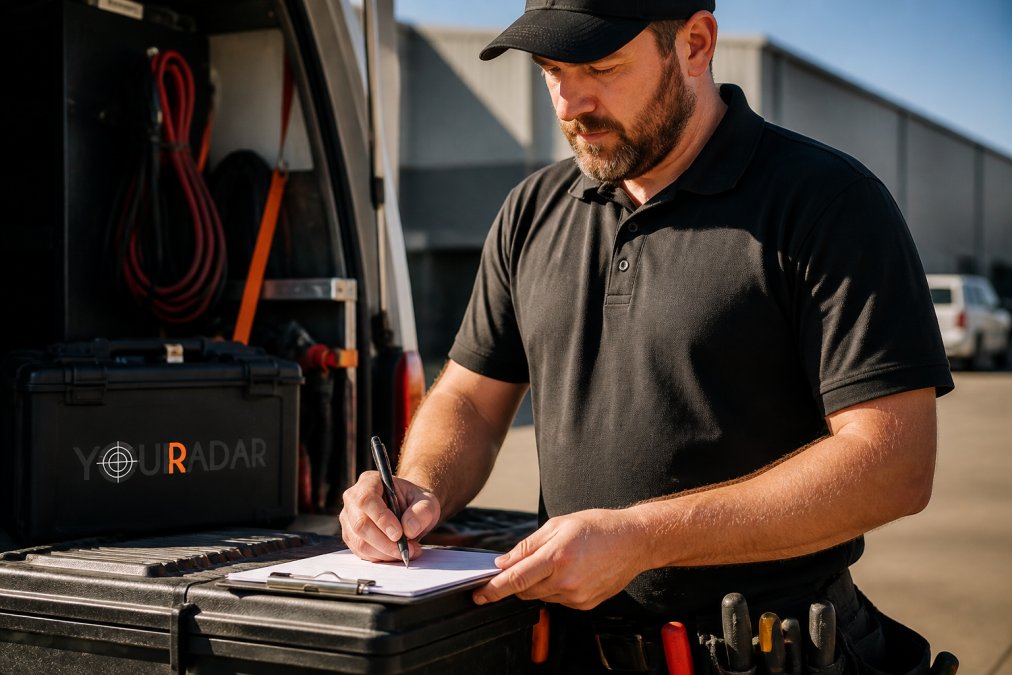
Manual timesheets, paper forms, spreadsheets, or email chains, create cascading operational headaches that drain both time and money. When technicians fill out sheets at day’s end or week’s end, details blur. Job start times get rounded. Materials used get forgotten. Travel time gets estimated instead of recorded. The result: billing discrepancies, payroll delays, and disputes over hours worked.
The real cost isn’t just administrative. Billing errors compound. A technician who logs 8 hours when they actually worked 7.5 inflates labor costs. Multiply that across a 10-person field team over a year, and the overpayments add up quickly. Conversely, underbilling happens just as often, jobs that took longer than expected get logged at standard rates because nobody tracked the actual time.
Manual entry also creates accountability gaps. When a dispatcher doesn’t know where technicians are or how long jobs actually took, they can’t optimize routing, spot inefficiencies, or respond to customer complaints with facts. They’re managing blind, relying on technician memory and goodwill.
Mobile Time Tracking Apps for Contractors: Core Features That Matter
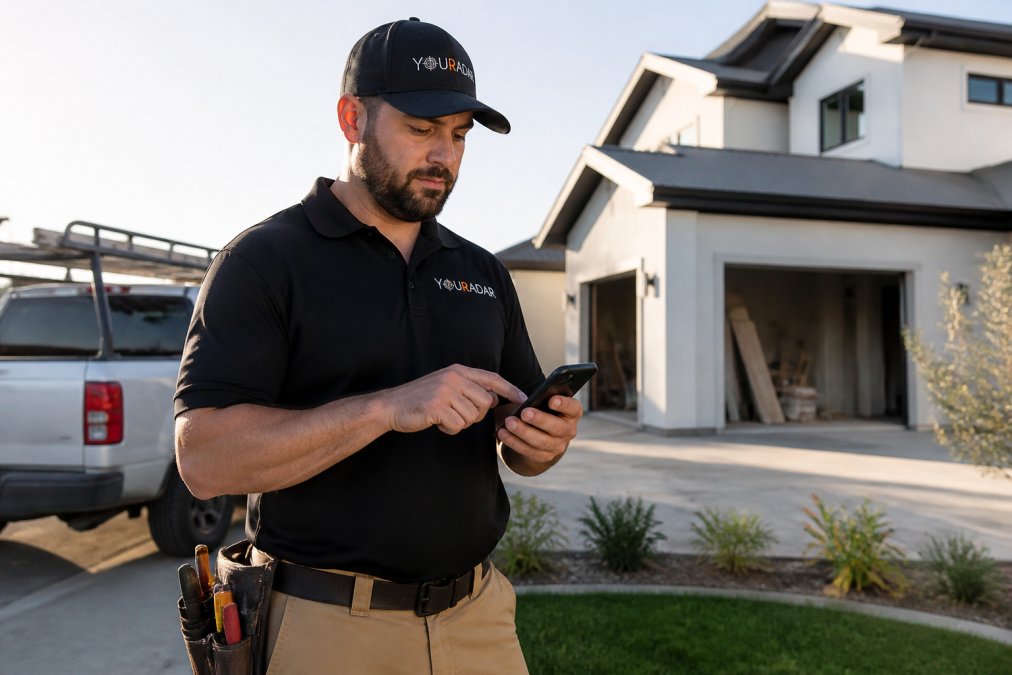
Mobile time tracking apps solve the core problem: they create an objective, timestamped record of work. When a technician taps a button to clock in and clock out on their phone, the system records the exact moment. No guessing. No disputes.
The best mobile time tracking apps for contractors include GPS tracking and geofencing capabilities. GPS logs the technician’s location when they clock in, proving they arrived at the job site. Geofencing takes it further, draw a virtual boundary around a customer’s property, and the app automatically triggers clock-in when the technician enters and clock-out when they leave. This removes manual entry entirely and eliminates the “I forgot to clock in” excuse.
Real-time data visibility matters too. A dispatcher sees exactly where each technician is, what job they’re on, and how long they’ve been there. If a job that should take two hours is stretching into four, the dispatcher knows immediately and can adjust scheduling for the rest of the day. This kind of real-time visibility transforms how field service teams operate.
Payroll integration is non-negotiable. The app should feed directly into your payroll system, eliminating manual data entry and the errors that come with it. When timesheets auto-populate payroll, processing becomes a verification step rather than a data-entry marathon.
Best Practices for Employee Time Tracking in Field Service
Getting field technicians to actually use a timesheet tracking system is where most implementations stumble. The app is only valuable if your team uses it consistently and accurately.
Start by addressing the skepticism head-on. Technicians worry that tracking is surveillance, that management will use data against them, or that the app will be buggy and cost them money. Be transparent: explain that accurate tracking protects them too. When hours are recorded objectively, disputes disappear. When jobs are tracked by location, overtime claims are defensible.
Make adoption easy. The app needs to be intuitive enough that a non-tech person can use it without thinking. If your team spends five minutes figuring out how to clock in, they’ll resent the tool. YourRadar, for instance, is built specifically for trades workers who aren’t tech-savvy, simple interface, minimal steps, works offline. That matters.
Set clear expectations about when and how clock-in happens. Does the technician clock in when they arrive at the job site or when they start working? Does the supervisor verify timesheets daily or weekly? Ambiguity breeds inconsistent behavior. Write it down. Train on it. Reinforce it.
Monitor adoption in the first two weeks. If someone isn’t using it, address it immediately. A gentle conversation beats waiting until timesheets are due and discovering half your team didn’t log hours. Early intervention prevents the system from becoming optional.
How to Reduce Billing Errors in Field Service Operations
Billing errors in field service usually stem from three sources: incorrect hours logged, missing materials or travel time, and manual transcription mistakes. Automated timesheet tracking eliminates two of these immediately.
When clock-in and clock-out are automatic (GPS-triggered or manually tapped), the hours recorded are objective. No rounding, no memory gaps. When the system integrates with job costing, materials and travel time can be tagged to specific jobs in real time. A technician notes that they used a $150 part on the Johnson job, it’s attached to that job’s record automatically.
The third source, transcription errors, disappears when timesheets feed directly into billing. Instead of a dispatcher manually entering hours from a spreadsheet into an invoice, the system generates the invoice from the timesheet. One source of truth. One chance for error instead of three.
Billing accuracy also improves because you can actually defend your invoices. When a customer questions why a job cost more than quoted, you have timestamped records showing exactly how long it took, what materials were used, and when the technician was on site. That defensibility often prevents disputes from escalating.
A common mistake is treating billing accuracy as a back-office problem. It’s not. It starts in the field. Accurate time tracking, job-specific material logging, and real-time data visibility are what make billing accurate. The invoicing itself is just the output.
Simplifying timesheet tracking for field technicians isn’t about buying the fanciest app, it’s about creating a system where data flows automatically from the field to the office. YourRadar’s mobile-first platform handles that flow with customizable features like dispatch mapping and automated timesheets, specifically designed for trades businesses. The platform integrates with your payroll system, eliminating manual entry and the billing errors that follow. Request a demo to see how simplified timesheet tracking can reduce administrative overhead and improve billing accuracy for your team.
Frequently Asked Questions
What is the best way to track staff hours for field technicians?
Mobile time tracking apps with GPS and geofencing are the most reliable method. Technicians clock in and out directly from their phones at job sites, creating time-stamped logs that eliminate manual entry errors. Cloud-based solutions sync data in real-time, giving managers visibility and automating payroll integration. For teams working offline, choose software with offline functionality so technicians can log hours without a signal and sync automatically when reconnected.
How can mobile time tracking apps reduce administrative burden for field workers?
Mobile apps eliminate paperwork and manual timesheets, removing the friction that discourages adoption. Technicians spend seconds clocking in rather than filling out forms, and automated payroll integration means office staff no longer manually process timesheets. Real-time data visibility also reduces dispatcher follow-ups and phone calls about job status, freeing your team to focus on billable work instead of administrative tasks.
How do you ensure accurate time tracking while complying with provincial labor standards?
Use software that creates time-stamped logs and maintains audit trails for every clock-in and clock-out event. This meets labor law requirements for record-keeping and provides documentation if disputes arise. Ensure your system tracks breaks and overtime separately if your province requires it. Regular audits of the data help catch discrepancies early. YourRadar's automated approach and customer portal visibility help maintain compliance while reducing manual errors.
What features should you look for in field service time tracking software?
Prioritize GPS and geofencing for accountability, offline functionality for remote areas, and direct payroll integration to eliminate manual processing. The interface must be simple enough for non-tech-savvy employees—complex software gets ignored. Look for real-time data visibility so dispatchers and managers can monitor workforce productivity and respond to issues quickly. Customizable features let you tailor the system to your specific workflow rather than forcing your business to adapt to the software.